Owners of hospitality venues and golf and country clubhouses can no longer rely on past formulas to meet their guest loyalty, membership retention, or new membership growth goals. The way people live and work has changed. So, too, have their expectations for the places they frequent. Hotels’ and clubs’ long-term sustainability relies on staying ahead of these shifts.
Theodore Roosevelt once said, “In any moment of decision, the best thing you can do is the right thing, the next best thing is the wrong thing, and the worst thing you can do is nothing.” Today, doing nothing may mean watching revenue continue to decline as your competition adapts to a new marketplace.
A feasibility study is a strategic tool that equips hospitality owners with a specific plan to thrive in a fast-changing world. This study clearly defines your vision before you commit to major cost outlays. It aligns stakeholders around why change is needed, what should be done, and where investment will deliver the greatest impact. It replaces guesswork with clarity and gives you the confidence to move forward knowing you’re making the right decisions for your guests, members, and investors.
A Feasibility Study Determines Your Most Viable Path Forward
A feasibility study is a detailed analysis that helps project owners identify the most tenable path toward project goals. This analysis assesses the current site and structure against your desired future state. It can uncover potential challenges to address and identify opportunities to future-proof operations and support business growth.
A complete feasibility study includes both the conceptual and schematic design phases of architectural and interior design. It clarifies programming details that define how the space will be used, while also shaping the required scope of work. It should also include a high-level cost analysis to guide planning and help you secure funding.
5 Scenarios for a Study
Feasibility studies are particularly valuable when the path forward isn’t clear. Consider conducting a study if:
- You have a problem – such as declining memberships or guest traffic – and suspect your space is to blame.
- You have unused or underused spaces in your facility that provide little to no revenue – but you are unsure how to move forward.
- Your facility hasn’t been updated in the past decade, restricting your ability to deliver the level of service expected by guests and members today or adapt to future trends.
- You are considering multiple potential projects and need a clear framework to prioritize where to invest.
- You’re considering managing a major in-house renovation.
How to Get the Most from Your Investment
A feasibility study typically costs between $18,000 and $35,000. Here are six key benefits you get can get from yours:
1. Identify the direction that will maximize your ROI
Many organizations want a renovation that transforms their entire building footprint all at once, which isn’t always fiscally possible. A feasibility study helps owners prioritize phases by identifying where a renovation will deliver the greatest return on investment and achieve their most urgent strategic goals.
For example, this study can help clubhouse owners determine what changes will make the biggest impact on their membership goals. If you’re weighing the benefits of attracting a younger, family-centric audience, a study can weigh the costs and benefits of additional lifestyle programming against expanding the core golfing area. Insights like these can help you understand your options and determine the best approach to satisfy your existing membership while also drawing in the future membership you aim to reach.
By providing a high-level estimate of construction costs, a feasibility study also helps you prioritize project phases based on your budget. This visibility is more essential than ever, as the cost of construction continues to escalate. In 2025, the cost of nonresidential construction materials rose 3.2% compared to the prior year, with some materials jumping as high as 22%, according to an Associated Builders and Contractors analysis of the U.S. Bureau of Labor Statistics’ Producer Price. A strong plan will ensure your project is completed on time and on budget.
2. Secure stakeholder buy-in
The stronger your planning, the more likely stakeholders will support your initiative. A feasibility study can help employees, guests and members, investors, and banks understand the value of a sizable financial investment. Early visuals and programming information can be used to generate excitement and buy-in for proposed improvements, while preparing people for the construction-related disruption to come. With its details on expected construction costs and tangible value creation, your study can also be used to help raise capital to cover your costs. A detailed study can inform more accurate projections for your ROI timeline.
3. Ensure the new design blends seamlessly with existing structures
Renovations should work with your existing building, not against it. A good feasibility study should identify ways to seamlessly integrate updates into your existing structure. The recommended plan should enhance operational flow, while improving the experience for your employees and your guests or members.
4. Deliver clarity that simplifies decision-making
The number of decisions required during a renovation can lead to analysis paralysis. A feasibility study can present your wants, needs, and goals in an easy-to-understand visual format. And by evaluating different paths and potential challenges, estimating costs, and delivering early visuals, a study helps instill confidence that you are making the best decisions. This cuts out all the “what ifs” and provides a clear roadmap to guide future growth.
5. Vet potential design partners
As we’ll explain later in this article, not every design partner delivers the same value. A feasibility study can be a good way to determine what you can expect from this partner during later stages of design. If this early phase doesn’t deliver on your expectations for service, then you can move forward with a new design partner when you’re ready to commit to a full architectural design.
6. Streamline construction
Good planning on the front end of your renovation can prevent surprises later in construction. A great feasibility study ensures that all construction partners understand your project goals and priorities. Your construction manager can work from this shared vision to ensure your design goals become reality. This early planning and alignment can also be valuable in keeping your project moving forward on schedule and on budget.
Your Roadmap to Results: the 4 Stages of a Feasibility Study
There are typically four stages of a feasibility study. At the end of the process, you should have in your possession a high-level schematic design. Expect the total process to take approximately 4 to 6 weeks.
The four stages of your feasibility study will include:
Stage 1: Discovery and analysis
The process typically begins with a site visit or project call and stakeholder meeting to evaluate and analyze existing conditions and set overall goals for building operations and aesthetics. This might include a full tour of the facilities to review adjacencies, traffic patterns, previous renovations, and potential code challenges. Interviews with members and staff are also included to provide valuable insight into what’s working and what’s not working, existing gaps in service, and current pain points.
Stage 2: Conceptual design
Next, the design team will evaluate the square footage needed to achieve your project goals. This might include identifying programs or spaces that do not support your goals or deliver expected ROI — and can be repurposed, reinvented, or decommissioned to make way for new spaces.
Designers will also begin to compare renovation plans with existing conditions and evaluate operational flow. A partner who is well-versed in the complex operational needs of hospitality venues can identify strategies to deliver a more seamless experience for guests, members, and employees.
Stage 3: Schematic design and visualization
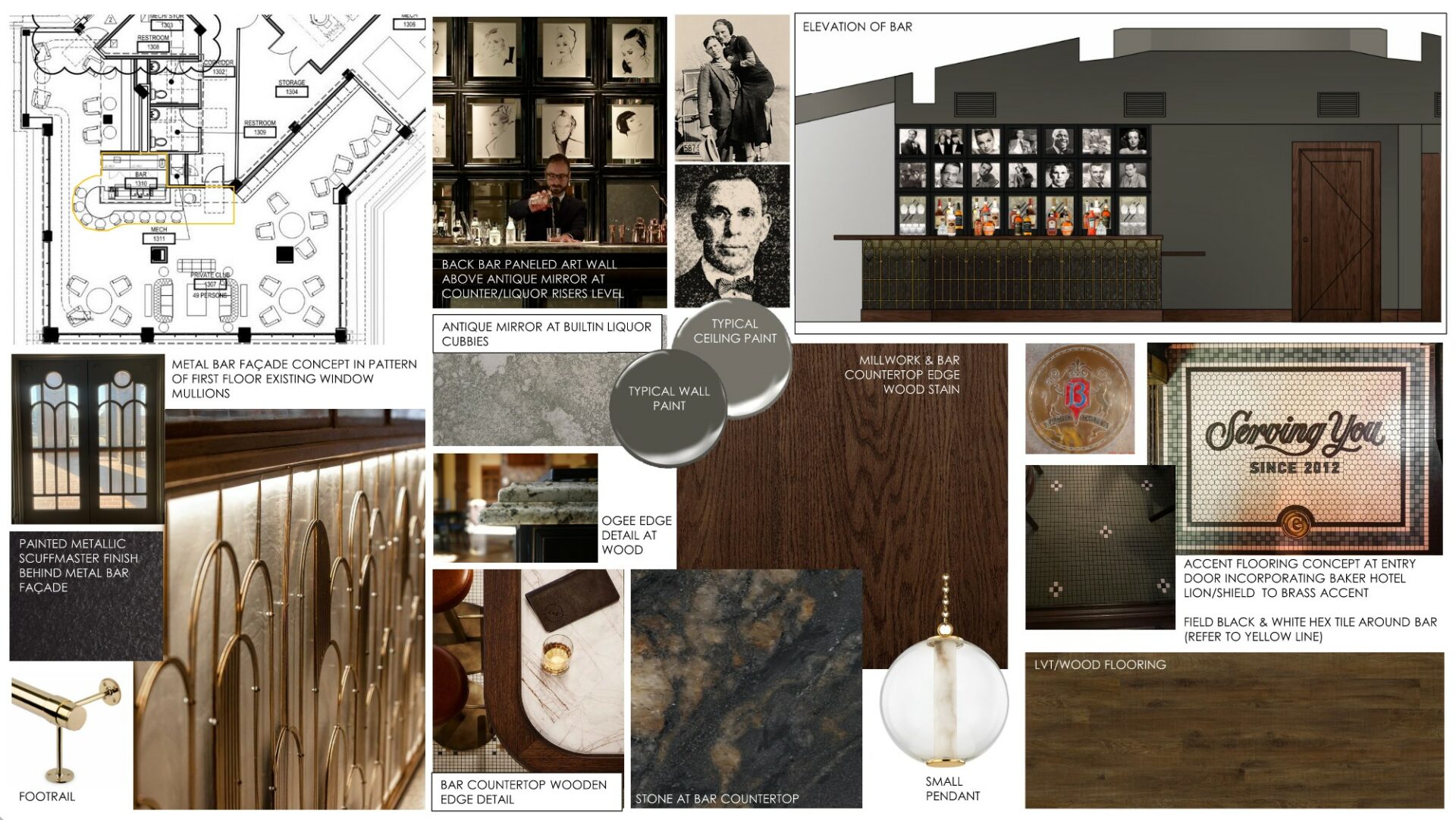
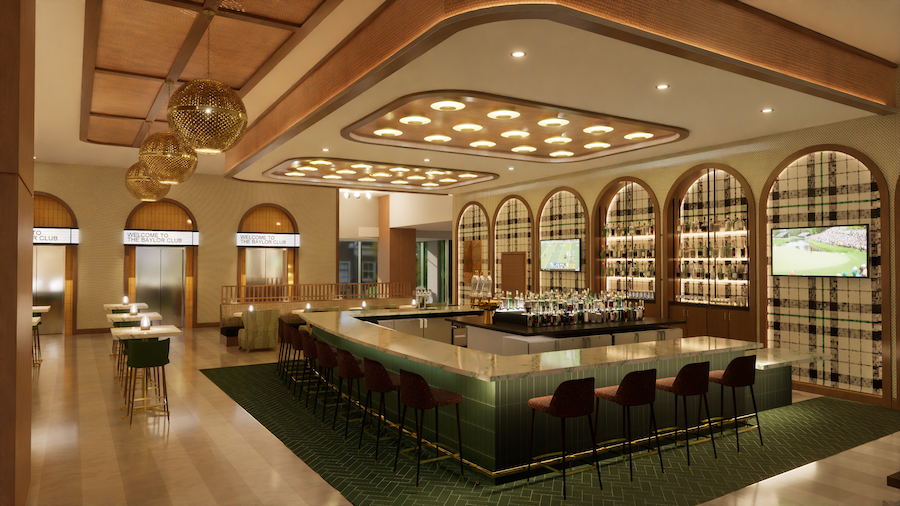
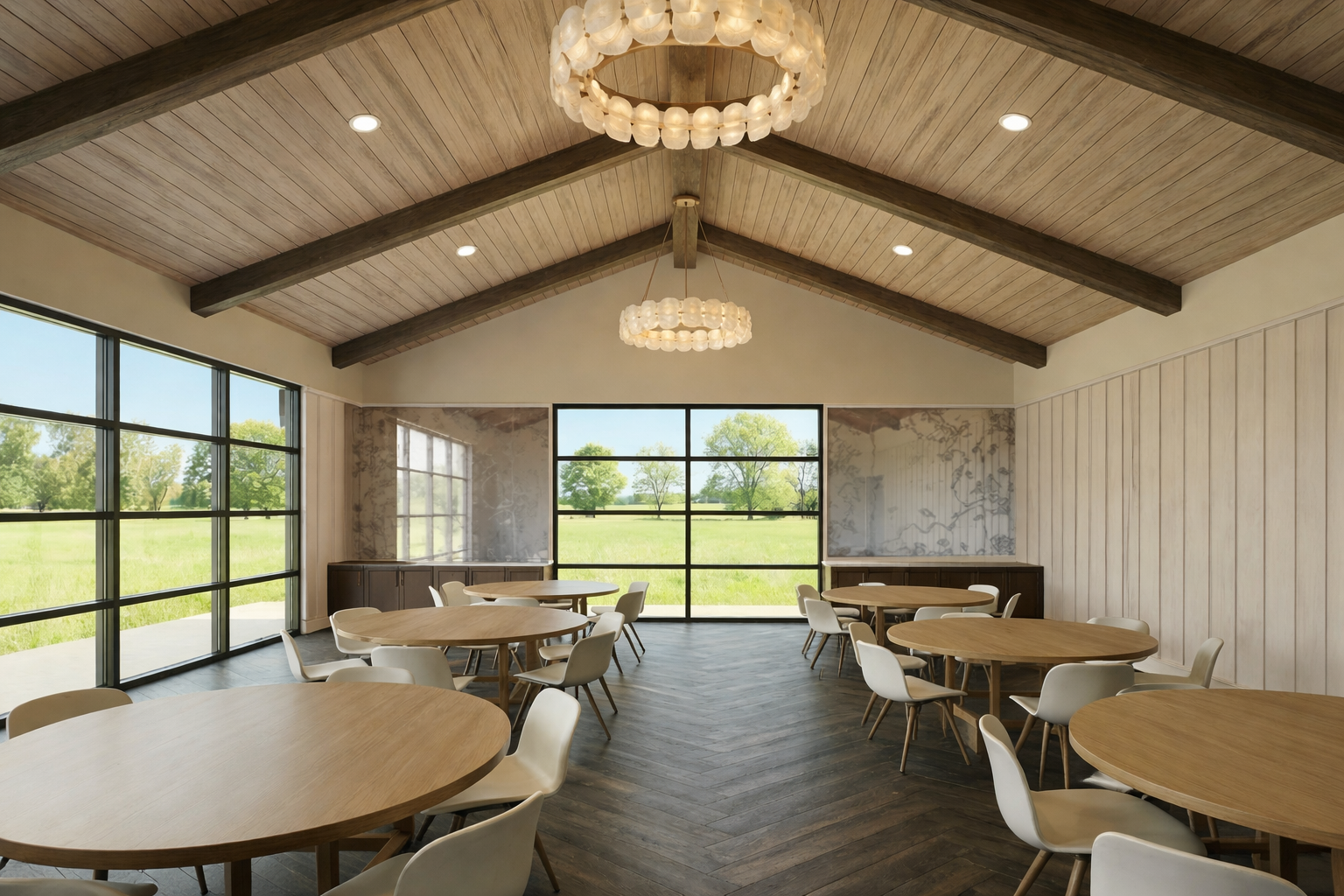
This phase further develops the approved block plans and conceptual imagery into furniture plans and conceptual renderings, providing a more comprehensive look at the finished project. Detailed plans and visualizations developed in this phase are instrumental in providing clarity and alignment of the project vision for stakeholders and operators, as well as for current and future members.
Stage 4: Construction cost estimates
With a clear understanding of square footage and aesthetic goals of the renovation, the design team can estimate the expected cost of construction. These estimates can guide work to secure project funding and serve as a basis of comparison for contractor bids.
An experienced estimator will break renovation costs down by specific areas of impact. This á-la-carte approach allows you the ability to prioritize phases based on funding availability and expected impact to revenue.
The Right Design Partner Drives Better Outcomes: Here’s How to Find Yours
Feasibility studies are a standard design offering, but not every architecture and design firm will offer the same level of service or output. Before selecting a partner, consider the following factors:
- Will your partner be starting from scratch or maximizing the value of your existing programming and square footage? The right partner will be able to design solutions that deliver new value in ground up construction as well as working with existing conditions.
- Does your partner offer turnkey service? Many feasibility studies only provide solutions through schematic design. As the feasibility study is only the first in a multi-step design process, it can help to start with a partner who can move from this study to the next phase of design and all the way through final installation. Partners with a broader range of skills can deliver more accurate cost estimating and value throughout the entire life of your project.
- Does your partner have hospitality industry expertise? A partner with design expertise in hospitality venues and golf and country clubs understands the potential impact every decision has on operations and profits. They can also offer valuable insight into what’s trending among your competitors.
Let’s Move Your Vision Forward
Thiel & Team has more than 25 years of experience helping hospitality owners bring their visions to life. We partner with owners and operators at the level of support they need. From feasibility study through every stage of architectural design, procurement and opening day, we’re committed to doing what it takes to deliver a seamless guest and member experience.
If you’re ready to take the next step, reach out. We’re here to guide you toward a successful renovation.