Master-planned communities are no longer just about curb appeal and clubhouses. These communities have become full-spectrum lifestyle destinations. Buyers have proven willing to invest in smaller homes in exchange for community-wide amenities that feel like an extension of the home.
When it comes to amenities of choice, buyers are looking for lifestyle programming that adapts to their life stage and values, nature-first infrastructure, and immersive opportunities to deepen social connection. By investing in human-centered community infrastructure, developers will find that they can deepen residents’ engagement with their community and dramatically increase absorption.
Lifestyle Zones Become the Destination
For decades, the clubhouse has served as the center of community for master-planned communities. However, growing interest in lifestyle amenities is prompting developers to think bigger. The result is a new focus on micro-destinations within the macro community.
Residents today want villages within villages: clusters of walkable, activated nodes that feel like distinct lifestyle zones, each with unique programming. Some neighborhoods are building community around themed areas, with a focus on wellness, adventure, arts, and family activities. Developers are anchoring this community infrastructure with hybrid third places that combine retail, community services, food and beverage, and family programming. Designs that emphasize nature and mobility – through placement of walking trails and bike paths, greenways, and bike and scooter parking – further reinforces the sense of connectedness while providing residents the freedom to explore.
The possibilities for zones are virtually endless, but depend upon a sound understanding of the target audience. Designers can identify opportunities to create flexible nodes, including:
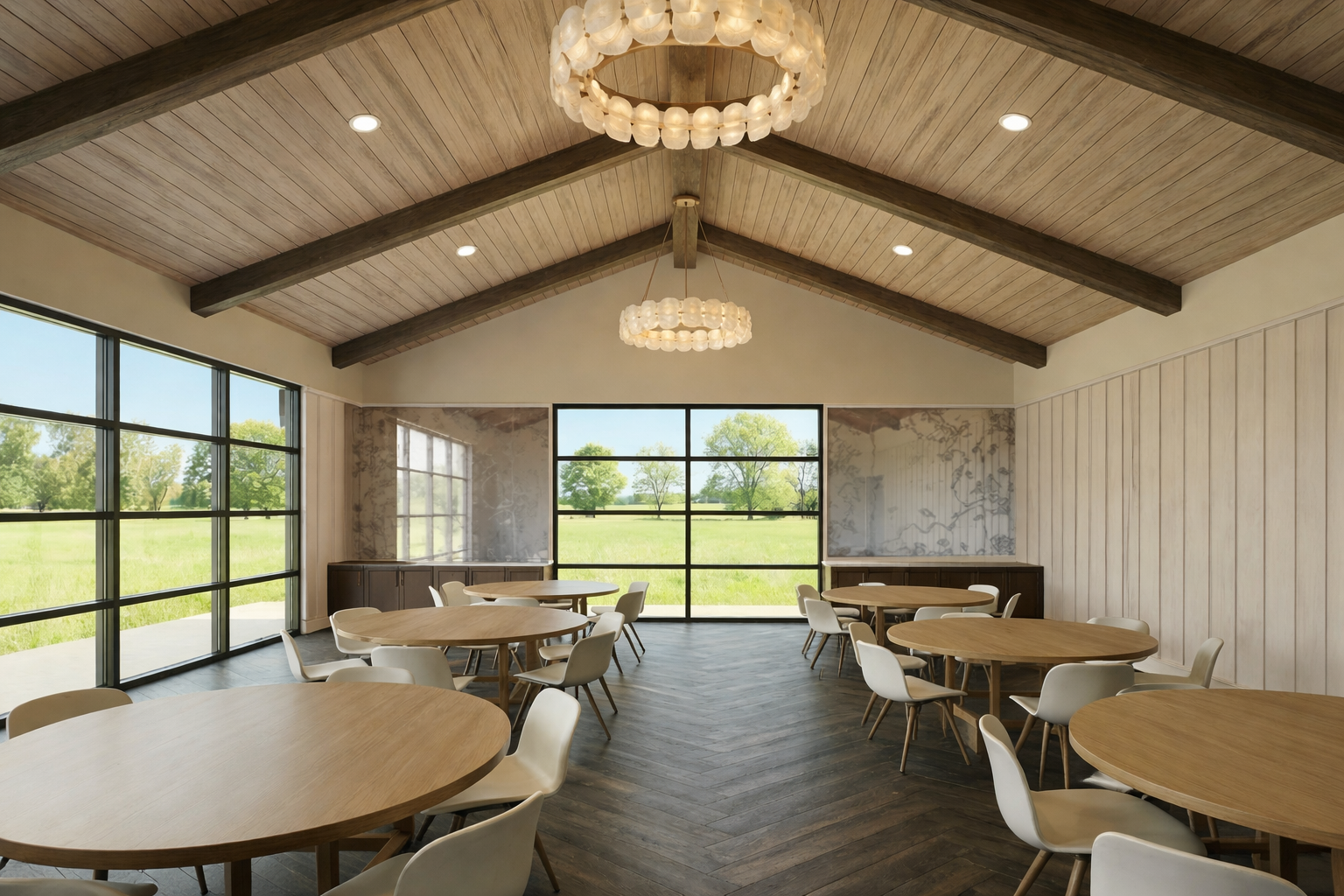
- Mixed-use pavilions with retractable walls, built-in audio-visual systems, and modular seating that support multiple functionalities from morning wellness through evening social activations.
- Flex zones with integrated coffee kiosks, event lawns, social firepits, shaded reading nooks, and play areas.
- Outdoor plazas structured to support farmer’s markets, pop-up shops, food trucks, and evening concerts.
- Walking trails that include hubs where people can park their bikes, have a seat, and grab a cup of coffee in the morning or a cold beverage in the evening.
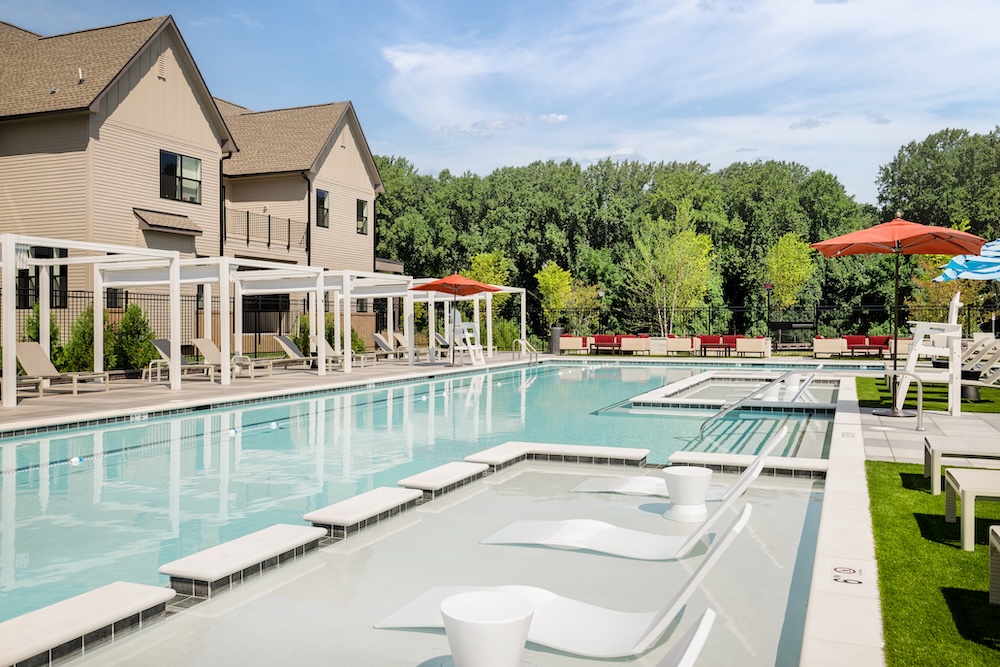
Amalyn, a master-planned community in Bethesda, Md., maintains the clubhouse as a social epicenter. Yet, the community’s focus on fostering a healthy and active lifestyle for residents of all ages opened up an opportunity to create zones across the property. Outdoor programming is supported by an inviting outdoor pool with a water lounge, grand sun deck, private cabanas, and an outdoor bar. A separate splash pad creates space for children. A state-of-the-art fitness center opens to a Zen garden where residents can gather for yoga or partake in meditation. Throughout the property, touchdown spots ensure that work is seamlessly integrated with daily life.
Nature Sets the Stage for Thoughtful Programming
Within the shift toward lifestyle-driven villages, nature has emerged as a key amenity. Master-planned community buyers see access to parks, trails, and open space as an essential amenity category. As a result, developers must consider not just the “villages” they’re creating but also the green spaces in between. These outdoor connections provide opportunities to design with intention. Simple features such as covered porches, community gardens, and firepit seating areas can lead to connection.
Like many master-planned communities, a vibrant Amenity Center sits at the center of Horizon Lakes in Rockwall, Texas. Yet it’s The Greens – a central welcome lawn and event space – that serves as the hub of activity and community. From The Greens, residents can easily access fitness amenities, aquatics programming, conference and coworking spaces. Winding trails thread through the community, encouraging walking and biking, and connecting residents to amenities that include a lakeside beach. A hillside restaurant will offer alfresco dining and lake views.
These spaces provide the stage for connection, wellness, and discovery, but thoughtful programming serves as a foundation for multi-generational community-building. A family pool, lazy river, and play fountain engage young families while a diving pool, biergarten, and ornamental vineyard make space for adults-only activities. Lifestyle activities, from yoga to pickleball, are designed to cater to a wide-ranging audience.
Community Infrastructure Engages All Generations
Amenities may be a key factor in attracting buyers, but they are the surface layer of what homebuyers really desire: community. Designing master-planned communities’ social infrastructure with intentionality is essential for facilitating neighbor-to-neighbor connection. Increasingly, this means designing physical spaces and programming for the entire family.
Master-planned communities give busy families access to many of the lifestyle activities they crave, making it incredibly easy to get to the gym, the golf course, and youth sports on a given day. But modern families span more life stages than ever. Even in 55+ communities, family-friendly gathering spots are a must. Master-planned communities that offer layered experiences for everyone, from toddlers to grandparents, foster a sense of community.
For example, more communities are installing multiple smaller pools over a single resort-style pool to create separate spaces for adults with and without young families. Pickleball courts have proven to have staying power because they provide space for multiple generations to enjoy. Placing activity lawns with toddler-safe turf alongside hammock gardens creates space for everyone to play and relax as they see fit.
While family-friendly gathering spots such as pizza ovens, splash pads, and outdoor movie lawns are gaining in prevalence, developers can accommodate multiple generations through simpler design details. Amenity centers that prioritize flexible indoor-outdoor social space over traditional formality can feel like an extension of the home for everyone.
Your Community Amenities Are Your Differentiator
The success of any master-planned community is rooted in one word: community. Without attention to the infrastructure that enables community-building, there’s little to differentiate a community from any other neighborhood. Forward-thinking designers can recommend community infrastructure that embraces today’s expectation and makes room for future changes.
This is an area where Thiel & Team excels. If you’re wondering how you can engage communities on your property, then reach out to our team today.