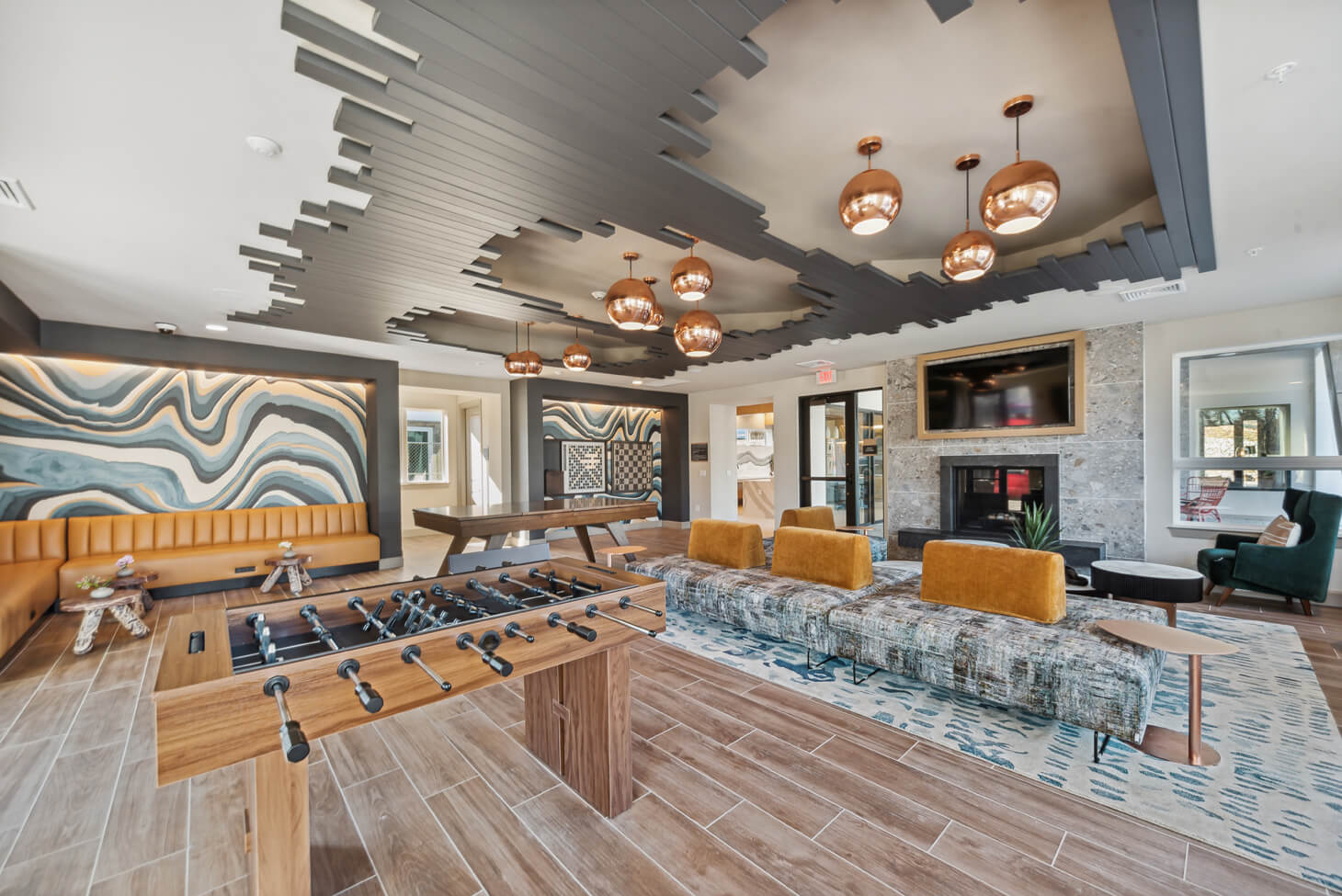
After a detailed design and lengthy construction process, interior design procurement is the final step to ensure your project finishes strong. The procurement phase is all about ensuring the vision created during the design phase is what your end users experience on grand opening day.
When procurement is executed well, it can appear deceptively simple to owners, almost like the furniture just arrives and is simply wheeled into place. That seamless outcome, while intentional, is anything but simple. Behind the scenes a highly coordinated process is unfolding to ensure every item is specified, ordered, tracked, delivered, and installed correctly, as the designer intended. Without visibility into these steps, it is easy to underestimate the process. That is why some owners rely on furniture dealers or internal property management teams to handle it. Often, it’s only after issues arise that the complexity and importance of a dedicated procurement process becomes clear.
A skilled procurement specialist navigates competing timelines, budgets, and intense logistical challenges. They’re managing an exacting level of detail in order to meet schedule milestones, coordinate reselections, manage freight logistics, and ultimately protect the end product and installation date. Your procurement team is addressing every detail that, if left unattended, could compromise the project’s end result.
Below, we break down what to expect from the procurement process and how the way it is handled can ultimately make or break your project.
What to Expect from Procurement in Interior Design
Interior design procurement is the process of acquiring all of the goods needed to complete a project following construction. This includes sourcing all materials, negotiating with vendors, managing contracts, and ensuring timely delivery of all materials to the project site, on time and on budget.
While the level of detail may vary based on the project requirements and level of complexity, a skilled procurement specialist can be expected to handle the following areas:
Sourcing all products. This includes everything from core furnishings to the smallest finishing details that complete a space, from window treatments to the pens arranged on office desks. A procurement specialist will have standing relationships with a range of vendors to ensure you receive the best possible price for the materials that best meet your goals.
Vetting third-party warehouses and partners. Carefully vetting third party warehouses and installation partners is an essential responsibility of the procurement team. A qualified procurement specialist will identify partners who can reliably receive, store, deliver, and install materials on schedule. Just as important as auditing insurance limits, they will review each partner’s project history to confirm familiarity with your project type, as the nuances associated with successfully installing for example, a multi-phase high rise project vs a luxury private golf club can vary widely.
Managing installation of artwork on multiple substrate types. Managing the installation of artwork across multiple substrate types requires specialized expertise. While an in-house team may be comfortable hanging a few framed pieces, large projects often involve hundreds of artworks, complex gallery walls, or large scale installations that must be completed within tight timelines. Procurement specialists coordinate certified art installers who understand how to mount artwork on materials ranging from drywall and stone to millwork and specialty wall coverings. This expertise is especially critical for complex installations such as multi piece collages or oversized statement artwork, where precise spacing, alignment, and sequencing are essential to preserving the designer’s original intent.
Warehouse scheduling. Carefully timing furniture and material deliveries to arrive at a local warehouse as close to the installation window as possible helps reduce unnecessary storage fees that can quickly add up over the course of a project.
Coordinating freight. This includes selecting the appropriate freight methods, carriers, and handling requirements to minimize damage risk and protect materials during transit.
Mitigating any damage that occurs during transit. There is always the potential for materials to arrive with damage. Your procurement specialist is trained to expeditiously manage the supplier’s claim process or hire an appropriate furniture medic to come on site and fix small issues to mitigate disruptions to your team’s operation.
Any one of the steps listed above can be complicated. A procurement specialist will have experience handling all of these challenges on a finite timeline and budget.
Know Your Procurement Options – and their Pros and Cons
Owners have options when it comes to how they handle procurement. By understanding the benefits and disadvantages associated with each option, you can trust you’re going into the procurement phase with realistic expectations.
Typical interior design procurement options are:
- Manage procurement in-house. While this approach may appear to be the least expensive option in the short term, it can carry significant hidden risks. Teams without procurement experience often underestimate the complexity and coordination required to manage the process successfully. When key details are overlooked, project delays, lost design intent, and cost overruns can follow. If you are considering entrusting procurement to a property management team, it is essential to confirm they have a clear understanding of the full process and the responsibilities it entails.
- Work with a furniture dealer. Furniture dealers product selections are often limited to specific manufacturers and product lines they have long standing agreements with. If you already know exactly what furniture you want, this can be a cost effective option. However, dealers may be incentivized to promote particular brands or in stock inventory, which may not always represent the best price, performance, or design solution for your project.
- Hire a third-party procurement specialist. Hire a third party procurement specialist. A standalone procurement provider focuses entirely on representing the owner’s interests throughout the purchasing and installation process. Because they are brand agnostic, product recommendations are based on what best supports the project’s design vision, performance requirements, and budget rather than commission structures. This flexibility becomes particularly valuable when a project requires a blend of semi custom and fully custom pieces to reinforce a brand story or create a distinctive, one of a kind experience. A dedicated procurement specialist establishes a clear strategy, aligns stakeholders, and coordinates closely with the design, construction, property management, and installation teams to ensure every detail is executed as intended.
Some design firms also offer interior design procurement as an integrated service offering. This eliminates the need to onboard an additional firm and helps ensure continuity between the design vision and the procurement process. When the design team remains involved in sourcing and purchasing, the likelihood of reselections that could compromise the original intent is greatly reduced.
How Much Do Interior Designers Charge for Procurement?
Procurement services are an investment in the successful delivery of your project. While it may be tempting to manage procurement internally, the process requires careful coordination across vendors, logistics, scheduling, and installation. When these moving parts are not carefully managed, small oversights can quickly translate into delays or costly corrections.
An experienced procurement specialist helps protect the project from those risks. They work alongside the owner and design team to source materials that align with both the design vision and the project budget. At every stage, they monitor spending, anticipate potential cost impacts, and identify solutions that keep the project moving forward without compromising quality, design intent, budgets or timelines.
What’s Really the Risk of Picking the Wrong Procurement Option?
When evaluating procurement options, it is important to consider not only the upfront cost, but also the downstream impact on your project. Procurement sits at the intersection of design, construction, logistics, and installation. When it is not managed with expertise, the risks can quickly compound.
- Project delays caused by missing, damaged, or late arriving items.
- Unexpected cost increases from extended warehouse storage, rushed shipping, or last minute reselections.
- Missed installation windows that disrupt construction schedules and delay occupancy.
- A finished space that falls short of the original design vision.
Procurement is the final phase that brings a project to life. When it is undervalued or mismanaged, the result is often a frustrating closeout experience that can overshadow the entire design and construction journey. When it is handled well, however, procurement ensures the finished space delivers exactly what the project set out to achieve, with a specialist managing the countless details along the way so owners and their teams can move through the process with clarity and confidence rather than last minute complications.
Ask the Right Questions to Find the Best Partner
Among the three procurement options listed above, a third-party procurement specialist carries the highest level of expertise. However, you can expect to find varying levels of support and expertise even among procurement specialists. If you do decide to work with a third-party professional, do your research in advance to ensure they will deliver the level of support you expect.
Before hiring a procurement service provider, consider asking the following nine questions to ensure your expectations align:
- At what stage in the process should we onboard the procurement team? Every project’s timeline goals are different. In most cases procurement ideally begins during the design process, before construction has begun. This gives your partner as much time as possible to help align stakeholders to budget and timeline requirements.
- Does your team hold professional certifications? Credentials such as Certified Purchasing Manager (CPM) or Certified Professional in Supply Management (CPSM), issued by the Institute for Supply Management (ISM), demonstrate advanced expertise in supply chain and procurement management. Procurement requires a very different skillset than design. If your design firm is also managing procurement, it is important to ensure the team responsible has dedicated procurement training and experience.
- What can you tell me about your vendor partnerships? From custom furniture makers to local warehouse operators, your procurement provider should have long-standing partnerships in place. When your procurement partner works with trusted partners, they know exactly where to go to meet your needs – and can trust they will get predictable results.
- How has your receiver, or consolidator, or installer been vetted? You’re not just placing your trust in your procurement provider, but also in their partners. Make sure that they have gone through proper procedures to ensure they’re working with reliable partners.
- Have you worked with the third-party installation crew before? You want to know that the team handling installation are professionals. Even if these partners have worked together previously, make sure that the third-party installation crew is bonded and insured.
- What costs aren’t included? Ideally, all potential procurement costs would be included in your initial quote. In the best-case scenario, your procurement partner will serve as a “budget ambassador,” prioritizing selections and decisions that keep your budget on track.
- Where do you typically see cost overruns occur? Change orders may not be entirely avoidable, but your procurement partner should be able to help you reduce this risk. For example, knowing in advance that you’ll be on the hook for additional costs in the event that longer product storage is required may support decision-making that prioritizes moving product from warehouse to job site on time.
- How do you work with architects and designers to streamline procurement? Your procurement specialist’s ability to work closely with the design team has a tremendous impact on your project schedule and budget. Ideally, the procurement team would be brought onto the project as early as possible to understand the owner’s vision and expectations. This early collaboration can also inform a more accurate budget. Once procurement begins, there should be regular check-ins with the design team to keep selections and timelines on track.
Raise the Bar: Work with an Experienced Procurement Partner
After investing in an exceptional design, engineering, and construction process, procurement is not an area to overlook. It is the stage where the vision becomes reality, and where careful coordination ensures that what was imagined on paper is delivered in the built environment.
This is the experience Thiel & Team delivers. Our turnkey procurement services provide a hospitality level experience for owners who want confidence that every detail is being managed with care.
From the moment you engage our team through the final placement of the last item, we manage the process with precision and accountability. We anticipate challenges, solve problems early, and ensure the finished environment reflects the design vision exactly as intended. All that remains for you is to walk into a space that feels exactly the way it was meant to from the very beginning. With turnkey procurement services, you can forget about the process and simply trust it will be perfect at completion.
If you’re ready to set your project up for success, reach out to Thiel & Team’s procurement professionals today.